 Visit Lisbon Guide
Is the 28E Worth the Queue? Lisbon's Yellow Tram, Honestly
Is tram 28 worth it is the question every first-timer asks when weighing up things to do in Lisbon after seeing the line at the terminus, and the honest answer depends on the clock. Ridden at 07:30 from the eastern end, the 28E is the best €1.72 (about $2) in the city: a 1930s wooden car grinding up through Graça, along the ridge past São Vicente and down through Alfama past the Sé on streets no bus could take. Ridden at 13:00 in July it is forty minutes in a queue, a standing crush with a pickpocket in it, and a view of somebody's backpack. This page sets out what the ride is, what it costs paid on board against on a card, what the queue looks like hour by hour, the three other historic Carris lines that carry the same cars with a fraction of the wait, and the two tour products that guarantee a seat. Fares are Carris' 2026 tariff, in force since 1 January 2026, and the timetable is the one Carris' own route page showed on 29 August 2026; dollar figures are approximations at €1 = $1.17.
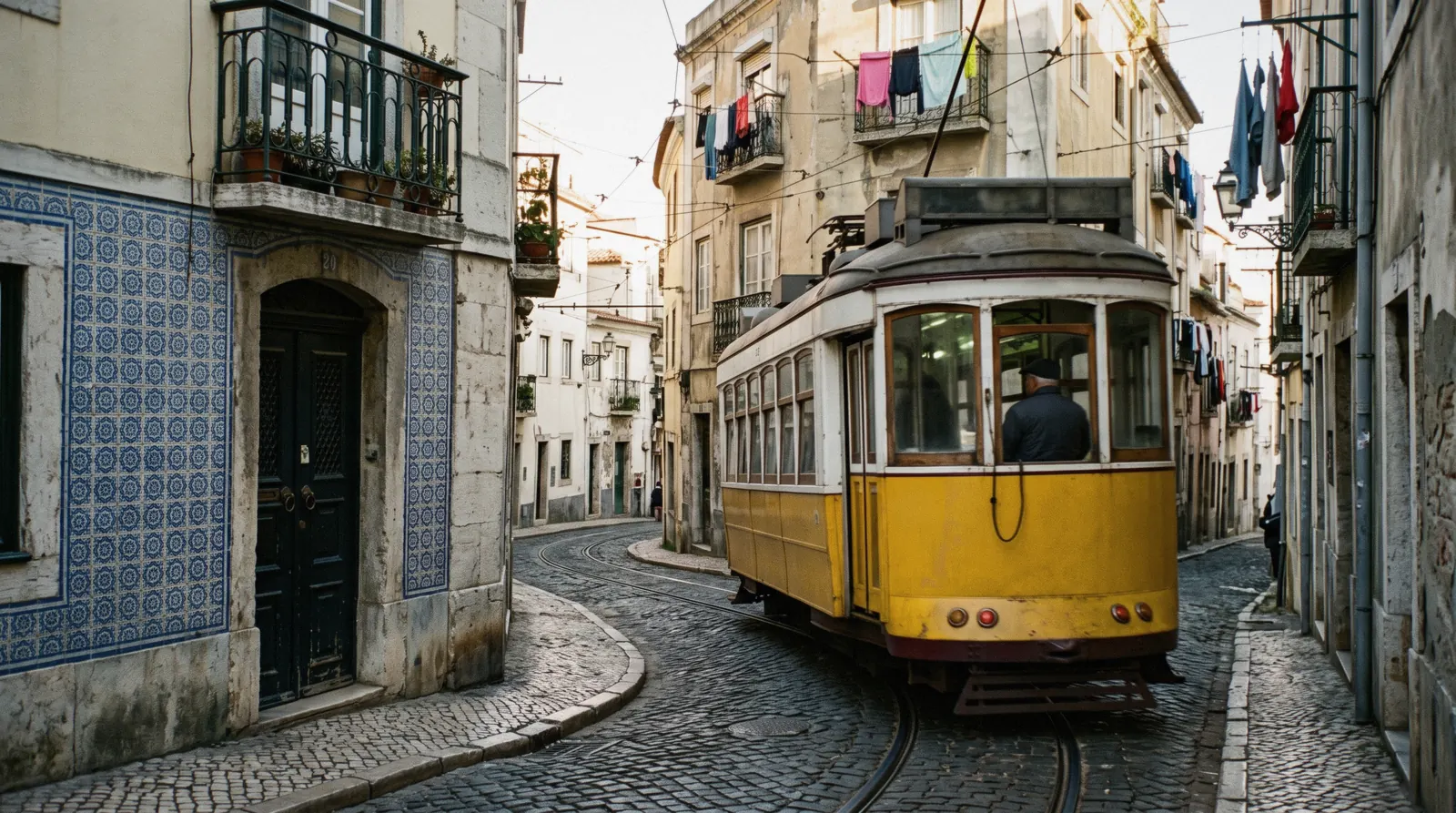
Quick answer The verdict, the fare trap, the queue by hour, and what to ride instead
Yes, once, early. Board at the eastern terminus before 09:00 and the 28E is worth every minute: a seat, an open window, and the stretch from Graça down through Alfama to the Sé that is in every photograph of the city. It is not worth a forty-minute queue at midday to stand in a crush, and it is never worth €3.30 paid to the driver when a €0.50 card makes the same ride €1.72. If you can only ride at midday, take the 12E loop from Praça da Figueira through the same hill instead, or pay for a seat on a tour.
Key takeaways
- There is no tram-28 ticket: it is an ordinary Carris route, €3.30 (about $3.85) on board and valid only in that car, or €1.72 with zapping on a navegante card, or free on the €7.25 24-hour pass and the Lisboa Card — the transport page explains the card
- Carris' August 2026 timetable showed the first car at 06:45 and the last at 22:30, roughly every 10 to 15 minutes at peak — and a route-alteration notice, so the terminus you queue at may have moved from Martim Moniz to Graça
- The three-hour ride-and-walk tour is the one way to guarantee the ride at a fixed time with a guide; the hop-on hop-off ticket runs its own vintage hills tram on a similar loop, not the 28
- Since 3 September 2025 the Glória, Bica and Lavra funiculars and the Santa Justa lift have been closed, which is one reason the 28E's line is longer than it used to be — it is the only historic Carris vehicle still running through the centre
- Pickpockets work this line more than any other in the city: front pocket, zipped bag in front of you, nothing loose in the crush at the Sé and Portas do Sol stops — the safety page has the tourist police numbers
What the ride actually gives you
The 28E is a little over seven kilometres of single track from the foot of the castle hill to the Prazeres cemetery in Campo de Ourique, and the reason it survives is the reason it is worth riding: the streets of Graça and Alfama are too narrow, too steep and too tightly curved for a bus or a modern tram, so Carris keeps 1930s Remodelado cars on them, rebuilt in the 1990s with new motors and brakes inside the old wooden bodies. On Rua das Escolas Gerais the car passes within arm's reach of the doorways. Nothing else in the city gives you that, and nothing else gives it to you sitting down for the price of a bus.
The stretch everyone photographs is the eastern third — up from Martim Moniz through Graça, along the ridge past the São Vicente church and the National Pantheon, down past the Portas do Sol and Santa Luzia viewpoints, past the Sé and into the Baixa. After Rua da Conceição it is a handsome but ordinary tram ride up to Chiado, along the edge of Bairro Alto and out to Estrela. The route page walks it stop by stop; what matters here is that the part worth queuing for is twenty minutes long, and the rest is transport.
What is special about it, and what is not
Special: the cars, the gradient, the streets, and the fact that it is a working bus route rather than a heritage ride — residents get on with shopping at Graça and off at the Sé, which is the thing tourist trams elsewhere have lost. Not special: the view from a full car. The windows are small, the standing passengers block them, and on a car loaded to capacity by the marshal at the terminus you will see the ceiling and the strap.
The whole case for riding early is that the special part only exists with a seat.
The fare trap: €3.30 to the driver, €1.72 on a card
Carris' 2026 tariff, in force since 1 January 2026 and read on carris.pt on 29 August 2026, is the source for every figure below; there is no separate tram-28 fare.
Pay the driver and the ride is €3.30 (about $3.85), valid only in the vehicle where you bought it — get off at Portas do Sol to look at the view and the next car costs €3.30 again. Buy a navegante occasional card for €0.50 at any metro station machine, load it with zapping credit in amounts from €3 to €40, and the same ride is €1.72 (about $2), or €1.90 as a single ticket valid for 60 minutes across Carris and the metro. Load a 24-hour pass instead for €7.25 (about $8.50) and every Carris tram and bus and the whole metro are covered for the day; €11.40 adds the CP trains to Sintra and Cascais. None of the 24-hour passes includes the funiculars or the Santa Justa lift, which are closed anyway. Tap the card on the validator inside the door at every boarding; a card with credit and no tap is a fine.
The Lisboa Card includes unlimited Carris and metro for its 24, 48 or 72 hours, so for a card-holder the tram is free and the queue is the only cost. Children under four travel free. Cash is not accepted on the articulated cars numbered 501–505, 507, 510 and 601–615 — those run the 15E to Belém rather than the 28E, but contactless, MB Way and the Via Verde app work on all of them.
| How you pay | Fare | Valid |
|---|---|---|
| On board, to the driver | €3.30 (about $3.85) | That car only |
| Zapping on a €0.50 navegante card | €1.72 (about $2) | Any Carris bus or tram, metro |
| Single ticket on a navegante card | €1.90 (about $2.20) | 60 minutes, Carris and metro |
| 24-hour Carris and Metro pass | €7.25 (about $8.50) | All day; not funiculars or Santa Justa |
| Lisboa Card | From €31 for 24 hours | All Carris and metro plus the monuments |
The queue, hour by hour
Carris' route page for the 28E, read on 29 August 2026, was showing its August timetable: first departure 06:45 and last departure 22:30 from the eastern end, roughly every 10 to 15 minutes between 07:00 and 19:00 and less often early and late. The page also carried a route-alteration notice covering the 12E and 28E, and the timetable it showed ran from Graça rather than Martim Moniz — so in August 2026 the eastern terminus, and the queue, had moved a stop up the hill. Check the page on the day, because the square you have been told to queue in may be the wrong one. Carris prints no journey time; guides put the end-to-end ride at 45 to 60 minutes depending on traffic and double-parked cars.
The queue is the tram's real timetable, and it runs on the coach and cruise-ship clock rather than on Carris'. Before 09:00 you walk on and choose a seat. From about 10:00 to 18:00 in the season there is a line round the terminus and a Carris marshal loading each car to standing capacity; forty minutes' wait is normal and an hour is not rare. After 19:00 the light on Alfama is better than at noon and the car is half empty. The last cars after 22:00 are nearly local. None of those wait times is a Carris figure — Carris publishes none — but they are consistent across the guides we read and the reviews on the tour cards below.
Is it better to ride early?
Yes, and not only for the seat. The 07:30 car from the eastern terminus to Portas do Sol puts you at the castle gate for its 09:00 opening with the ride already done and nobody on it; Alfama, the Sé and the Baixa are then all downhill from you. Ride it once as transport in the morning and once more, if you want the photographs, in the evening after 19:00.
Never plan the ride for the middle of the day unless you have bought a seat.
Pickpockets: the one warning, and what to do about it
The 28E is the most-worked line in the city by pickpockets, who board with the crowd at the terminus and work the crush at the Sé and Portas do Sol stops where people push to get off. Phones from back pockets and wallets from open bags are the standard losses. The fix is dull and it works: front pocket, zipped bag worn in front of you, nothing in a jacket hung over your arm, and a seat rather than a standing place if you can get one — which is one more argument for the early car.
Carris says nothing about it on its route page; the guides say the same thing every year. If it happens, the PSP tourist police station is in the Palácio Foz on Praça dos Restauradores, telephone +351 213 421 623, and 112 is the emergency number; the safety page has the report procedure and what your insurer will ask for.
Five ways to ride the hill, ranked by queue
The same 1930s cars run on three other Carris routes with almost nobody on them, and two tour products sell a seat. Timetables below are the August 2026 ones on Carris' route pages, read on 29 August 2026; the tour prices are the platform's euro figures on the same day.
Read the last column first. The 12E carries the same cars through the same hill for the same fare and had cars roughly every 37 minutes in August, which is its only weakness — miss one and the wait is half the 28E's. The 24E is the quiet one and it does not touch Alfama at all.
| Ride | Route | Fare | Queue |
|---|---|---|---|
| Tram 28E | Graça / Martim Moniz – Campo de Ourique via Alfama, Sé, Chiado, Estrela; 06:45–22:30 | €1.72 on a card, €3.30 on board | Long 10:00–18:00; none before 09:00 |
| Tram 12E | Graça – Praça Luís de Camões loop via Martim Moniz, Portas do Sol, Santa Luzia, Sé; 09:00–20:15 in August | €1.72 on a card, €3.30 on board | Short — same cars, same hill, fewer riders |
| Tram 24E | Praça Luís de Camões – Campolide via Príncipe Real and Rato; 10:10–18:05 in August | €1.72 on a card, €3.30 on board | Almost none; no Alfama |
| Tram 15E | Praça da Figueira – Algés via Cais do Sodré and Belém; 00:03–23:53 | €1.72 on a card, €3.30 on board | Modern articulated cars; a transport line to Belém, not a heritage ride |
| Ride-and-walk tour | Meets at Praça Luís de Camões; rides the stretch worth riding, walks the old town with a guide; 3 hours | €20 (about $23) | None — a reserved seat at a fixed time |
| Hop-on hop-off | Yellow Bus's own vintage hills tram on a similar loop, plus the buses and a boat; 72 or 96 hours | €47 (about $55) | Its own line, shorter; it is not the 28 |
The 12 or the 28?
For the view, the 12E. It leaves from the same square, climbs the same streets to Portas do Sol and Santa Luzia and comes down past the Sé, and it is a loop, so you end where you started. What it lacks is the western half of the 28E's route — Chiado, Bairro Alto, Estrela — and frequency. If you want the whole line end to end, or you are using the tram as transport across the city, ride the 28E early. If you want the twenty minutes of Alfama that the photographs are of and it is already noon, the 12E is the better answer.
One more thing the guides used to recommend and cannot now: the Glória, Bica and Lavra funiculars and the Santa Justa lift have all been closed since the Glória derailment on 3 September 2025, with replacement buses 51E, 22B and 19B and no reopening date on carris.pt when we checked. They used to absorb some of the crowd that wanted a heritage ride; that crowd is now in the 28E's queue.
Ride it, or don't
If you can be at the eastern terminus before 09:00
ride the 28E end to end for €1.72 on a card. This is the ride the reputation is built on.
If it is already midday and the line is round the square
walk to Praça da Figueira and take the 12E loop through Portas do Sol and the Sé — same cars, same hill, a fraction of the wait.
If you want a seat at a fixed time and someone to explain what you are looking at
the three-hour ride-and-walk tour at €20, which rides the stretch worth riding and walks the rest.
If you are using it as transport to the castle
the 07:30 car to Portas do Sol, then eight minutes uphill to the castle gate for 09:00 opening.
If you hold a Lisboa Card or a 24-hour pass
it is free, so ride it twice — early for the seat, after 19:00 for the light — and never queue at noon.
If you were planning the ride around the funiculars and the lift
they are closed until further notice; the funiculars page has the replacement buses and the walking routes up the same hills.
The two ways to buy a seat
Both cards link to the operator's own page, where the live calendar shows the next available departure. Prices are the euro figures listed on 29 August 2026; the platform charges in your own currency at checkout. Neither is the ordinary Carris tram — the first rides it with a guide, the second runs a tram of its own.
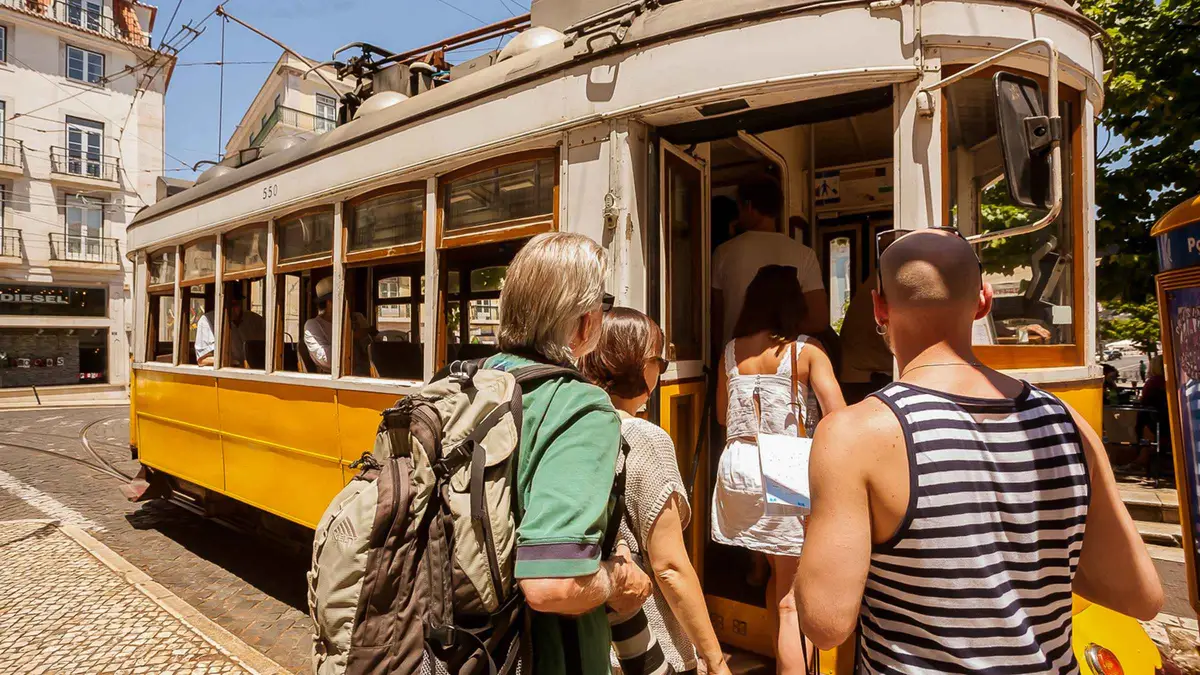 from €20
Lisbon Tram No. 28 Ride & Walking Tour
listed at $23.17
Three-hour combination of a ride on Tram 28 up the hill and a guided walk through Alfama and its viewpoints. Solves the packed-tram problem by riding it with a guide and a plan.
Check Availability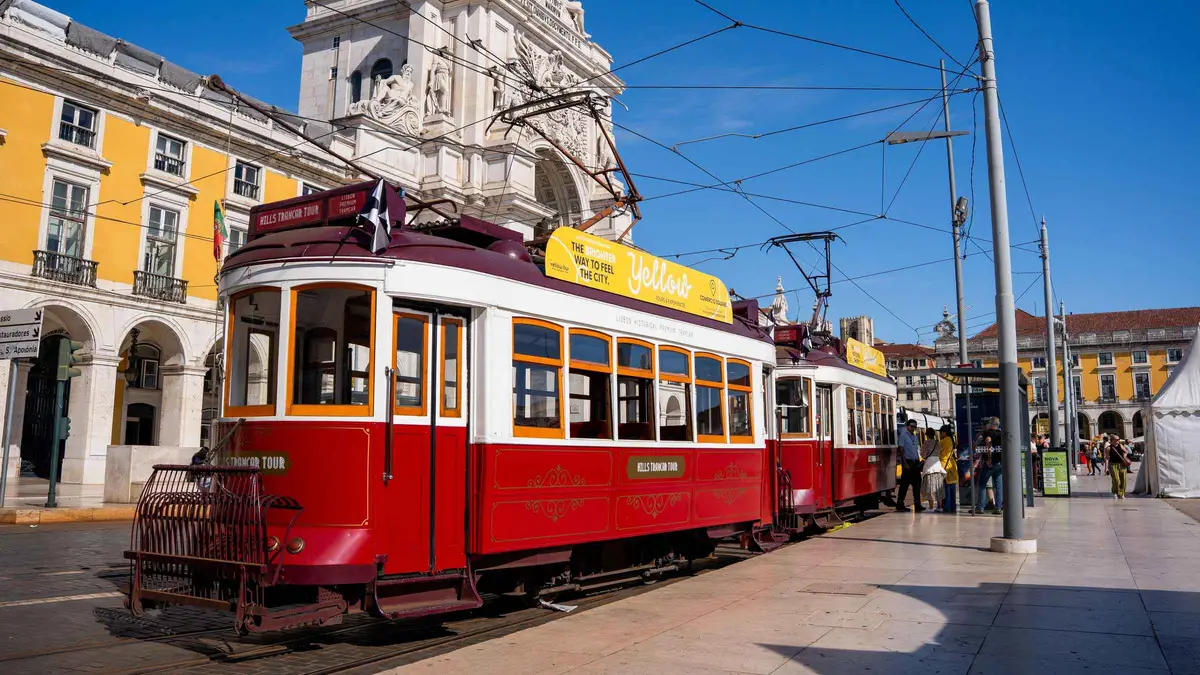 from €47
Lisbon: 72/96-Hour Hop-On Hop-Off Bus, Tram & Boat Ticket
listed at $49
Hop-on hop-off pass covering open-top bus, a vintage tram and a Tagus cruise for 72 or 96 hours. Overlaps with the Lisboa Card only on transport, not on attraction entry.
Check AvailabilityPrices, ratings and details are the platform's own. Dollar figures are the listed prices. The platform bills in your account's currency.
Where the ride fits in a Lisbon day
Use it once, early, as transport. The first cars from the eastern end leave at 06:45; a car at 07:30 puts you at Portas do Sol with the city still asleep, and from there the castle, Alfama, the Sé and the Baixa are a downhill walk in that order. The tram would only carry you past the things you came up the hill to see. Ride it a second time in the evening if you want the photographs: the light on Alfama after 19:00 is the light in every picture of the 28E, and the cars are half empty.
On a day with the Lisboa Card both rides cost nothing; on a day without, load a navegante card at the metro before the first ride and the whole day's trams and metro run under €8. The one-day itinerary starts with exactly this ride, and the getting around page has the rest of the network, the night buses and what the strikes rule means for a planned morning.
Questions about the queue, the fare and the alternatives
Is the 12 or the 28 better?
For the Alfama hill at midday, the 12E: the same 1930s cars climb from Praça da Figueira through Portas do Sol and Santa Luzia and come down past the Sé in a loop, with a fraction of the queue but only a car roughly every 37 minutes on the August 2026 timetable. For the whole line — Graça to Estrela through Chiado — or for a seat with the window open, the 28E before 09:00. Both cost €1.72 on a card.
What is special about the 28E?
The cars and the streets. Carris keeps 1930s Remodelado trams on the route because Graça and Alfama are too narrow, steep and tightly curved for anything modern, so the ride is a working bus route through streets no bus could take, for a bus fare. What is not special is the view from a car loaded to standing capacity — which is why this page says ride early or take the ride-and-walk tour with a reserved seat.
Can you hop on and off the 28E?
With a navegante card, yes — each boarding is a €1.72 zapping fare or free on the €7.25 24-hour pass and the Lisboa Card. Paying the driver €3.30 buys one car only, so each hop costs €3.30 again. The catch is reboarding mid-route in the season: a full car does not stop, so hopping off at Portas do Sol at noon can mean walking the rest. The hop-on hop-off ticket is a different product with its own tram.
Is it better to ride early in the morning?
Yes. Before 09:00 you walk on at the terminus and choose a seat; from about 10:00 to 18:00 in the season the wait is forty minutes and the car is a standing crush. The first car leaves at 06:45 on Carris' August 2026 timetable. A 07:30 ride to Portas do Sol is also the right way to reach the castle for its 09:00 opening.
How long is the queue at the terminus?
Carris publishes no figure. The guides and the reviews we read agree on forty minutes as normal between 10:00 and 18:00 in the season and an hour as not rare, with a marshal loading each car to capacity. Before 09:00 and after 19:00 there is usually no line at all. Note that in August 2026 the timetable on Carris' page ran from Graça rather than Martim Moniz under a route-alteration notice — the route page explains where to stand.
Is it a loop?
No. The 28E runs end to end from the castle side of town to Campo de Ourique and comes back the same way; ride it out and you ride it back, or walk. The 12E is the loop — it leaves Praça da Figueira, climbs through Alfama, comes down past the Sé and returns to where it started — and the getting around page has both drawn on the network map.
The Ride, the Queue and the Case Against, Before You Decide
Three views of the same tram: a rider who says skip it, a rider who explains how to do it well, and the ride itself filmed from inside the car on the steepest stretch.
Don't Take Tram 28 | Things I Wish I Knew Before Going to Lisbon
The case against, made from the midday queue — the version of the ride this page tells you to avoid.
Video: Hello WinnieLisbon's Tram 28: Best Tips for Riding The Tram and Exploring the City Like a Local
Where to board, when to go and how to pay — the practical half of the decision.
Video: The Better VacationTaking A Ride On The Famous Tram Eléctrico E28 In Lisbon | One Of The World's Steepest Inclines
The ride itself from inside a Remodelado car on the Graça and Alfama gradients, which is what a seat buys you.
Video: DW EuromaxxVideos load from YouTube only when you press play.