 Visit Lisbon Guide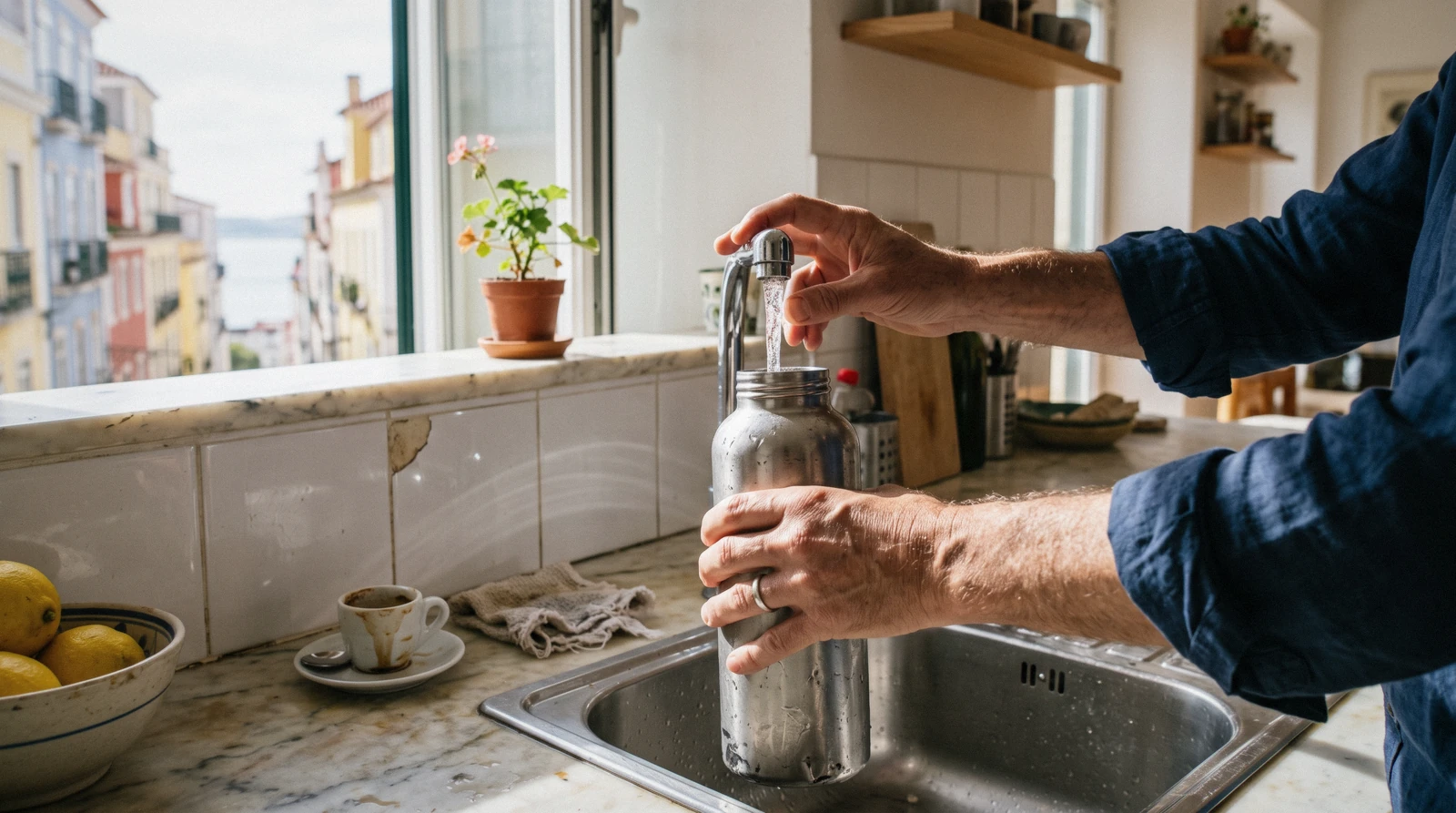
Can You Drink Tap Water in Lisbon?
Can you drink tap water in Lisbon? Yes, everywhere — and the case for Lisbon tap water is not folk wisdom but published data: EPAL, the company that has supplied the city for over 150 years, runs about 300,000 water-quality determinations a year and prints the network's chemistry in its own public documents, which we read on 30 August 2026. This page is deliberately short. It gives you the numbers behind the yes, the honest explanation of the chlorine taste, how the bottled-water custom works at a restaurant table, and how the refill habit fits a city of hills and hot afternoons. The fuller table-ritual picture — the couvert, tipping, kitchen hours — lives on where to eat in Lisbon.
Quick answer Yes it's safe, what the utility's own numbers say, and how to ask for it at a table
Yes — Lisbon tap water is safe to drink, and EPAL, the utility that supplies it, publishes the proof: about 300,000 quality determinations a year showing more than 99% compliance with Portuguese and European standards, water drawn mainly from the Castelo do Bode reservoir on the Zêzere and from Valada Tejo, and a city-network chemistry that reads soft and unremarkable — pH 8.1, nitrates 1.8 mg/L, sodium 13 mg/L on the utility's own published table. The only thing you may notice is a faint chlorine edge, which is a treatment fact, not a warning sign.
Key takeaways
- The water is soft to medium — EPAL's supply averages 80 mg/L of calcium carbonate — so it tastes clean and leaves little scale; the readings are tabled below
- In a restaurant, bottled arrives by default: ask for "água da torneira" and accept that a tourist-facing place may decline — the custom, explained honestly below
- A refilled bottle is the cheapest drink you will carry up the castle hill on the €25 history and lifestyle walk or between stalls on the €70 food and wine tour
- August afternoons average 28.8°C, so size the habit to the heat — the full month table is on best time to visit
What EPAL Publishes About the Water
The proof behind the yes. EPAL's public FAQ and its Água da EPAL leaflet — both read on epal.pt on 30 August 2026 — print the supply's sources, the scale of testing and the measured chemistry of the Lisbon city network; Portuguese drinking water is governed by Decreto-Lei 69/2023. The readings below are the ones a visitor can actually taste or notice.
The sources, the testing and the app
Lisbon's water is drawn from surface and underground sources — the Castelo do Bode reservoir on the river Zêzere, the Valada Tejo intake on the Tagus, and boreholes at Alenquer, Ota and Lezírias — treated at EPAL's two treatment plants and disinfected with chlorine in the minimum quantities that keep it microbiologically safe to the tap. The utility runs more than a thousand laboratory analyses a day through two labs accredited to ISO/IEC 17025, and its own headline figure is about 300,000 determinations a year with more than 99% compliance. Its free H2O Quality app (iOS and Android) shows the readings for whatever address you are standing at.
| Parameter | Lisbon network value | What it means at the tap |
|---|---|---|
| pH | 8.1 | Slightly alkaline and comfortably inside the legal 6.5–9.5 band — unremarkable, which is what you want |
| Total hardness | 58 mg/L CaCO3 (city network); supply-wide 40–170, average 80 mg/L | Soft to medium: little scale in a kettle, nothing at all in a glass |
| Nitrates | 1.8 mg/L | The parameter people worry about, at a small fraction of the 50 mg/L limit |
| Sodium | 13 mg/L | Low — a litre of Lisbon tap carries less sodium than a slice of bread |
| Calcium / magnesium | 18 / 3.1 mg/L | A light minerality; this is water on the soft side, easy to drink in quantity |
| Chlorides / sulfates | 15 / 17 mg/L | Both far under their 250 mg/L limits — no salty or mineral edge |
Two honest limits on the data
Two honest limits on the sourcing, printed rather than hidden. First, the chemistry table above comes from EPAL's own Água da EPAL leaflet, whose printed edition is dated 2018, and the FAQ carrying the 300,000-analyses and hardness figures is a 2023 edition — the utility publishes newer monthly statistical maps per supply zone, but its menu pages print no current per-parameter values directly on the page. Second, EPAL itself notes that what reaches your glass in an old building can be altered by the building's own pipes, not the network — its advice after any long absence is to let the tap run for a few seconds, which is also the honest answer to the occasional metallic note in an older Alfama rental.
The Chlorine Taste, and What to Do About It
The most common visitor complaint about Lisbon's water is not safety but flavour, and the utility's own FAQ answers it plainly.
Chlorine is dosed in small quantities across the whole system and monitored around the clock, because it is what keeps the water microbiologically safe from the treatment plant to your tap — so a faint swimming-pool note, especially in summer, means the system is working, not failing. EPAL's own advice for sensitive palates: keep a covered jug or bottle of tap water in the fridge, since the chlorine dissipates and the cold flattens the taste, and drink it within a day. A squeeze of lemon does the rest.
The same FAQ answers the other two things visitors notice. Water that runs white from the tap is dissolved air, not contamination — it clears in a standing glass in seconds. And a yellowish tinge traces to iron in old building pipework; the utility's limit for iron is 200 µg/L in the network, and its advice is the same run-the-tap-first-use rule. None of these is a reason to buy bottled — where the bottle does enter the story is the restaurant table, below.
Restaurants and the Bottled-Water Custom
The moment that confuses first-timers: you sit down, the waiter asks "água?", and a bottle you are paying for arrives. Here is the honest version of what is happening.
Bottled water at the table is custom and margin, not regulation: we found no rule that requires a Portuguese restaurant to serve bottled water or forbids it from pouring tap, and no official body publishes what the bottle should cost — it is simply a priced line on the menu, like the couvert beside it. The waiter will ask "fresca ou natural?" (chilled or room temperature) and bring a bottle unless you head that off.
The script: ask for "água da torneira" — tap water. A neighbourhood tasca will usually oblige; a tourist-facing place may say bottled only, and that refusal is allowed, mildly annoying and not worth a scene. What you should never do is pay for water twice: refill before lunch, and let the restaurant bottle be a choice rather than a reflex. The rest of the table ritual — the couvert law, tipping, kitchen hours — is on where to eat in Lisbon, and where drinks sit in a whole day's spending is on what Lisbon costs.
The Refill Habit, Sized for Lisbon
One bottle, refilled, covers a Lisbon day better than any bought drink — and this city sets its own constraints worth knowing before you pack.
Time it to the heat and the hills. From June the climbs do the real work — August's average daytime high is 28.8°C (84°F) on IPMA's 1991–2020 normals, and the castle approach and the Graça viewpoints are the two-refill undertakings of the itineraries on things to do in Lisbon. The pattern that works: fill at breakfast, again before any afternoon walking, and treat the €7.25 transport day on getting around as the air-conditioned recovery between climbs.
One negative finding, stated as such: unlike Rome or Paris, Lisbon publishes no city map of public drinking fountains that we could verify on an official page, so treat street fountains as ornamental unless they are explicitly marked as drinking water ("água potável"). Your reliable refill points are your accommodation, any café where you are a customer, and the tap behind every counter — which, as the numbers above show, is the same water the bottle on the table came to replace. The climbs and the refill arithmetic are exactly what lisbon walking tours hand to a guide, which is why the itineraries in the heat work best as guided routes.
The Bookings a Water Bottle Belongs On
Three walking-heavy bookings where the refill habit earns its keep — hours on your feet across the hills, most of it outdoors, with a guide who knows where the shade is. Prices are as listed by the operator and were read on 30 August 2026.
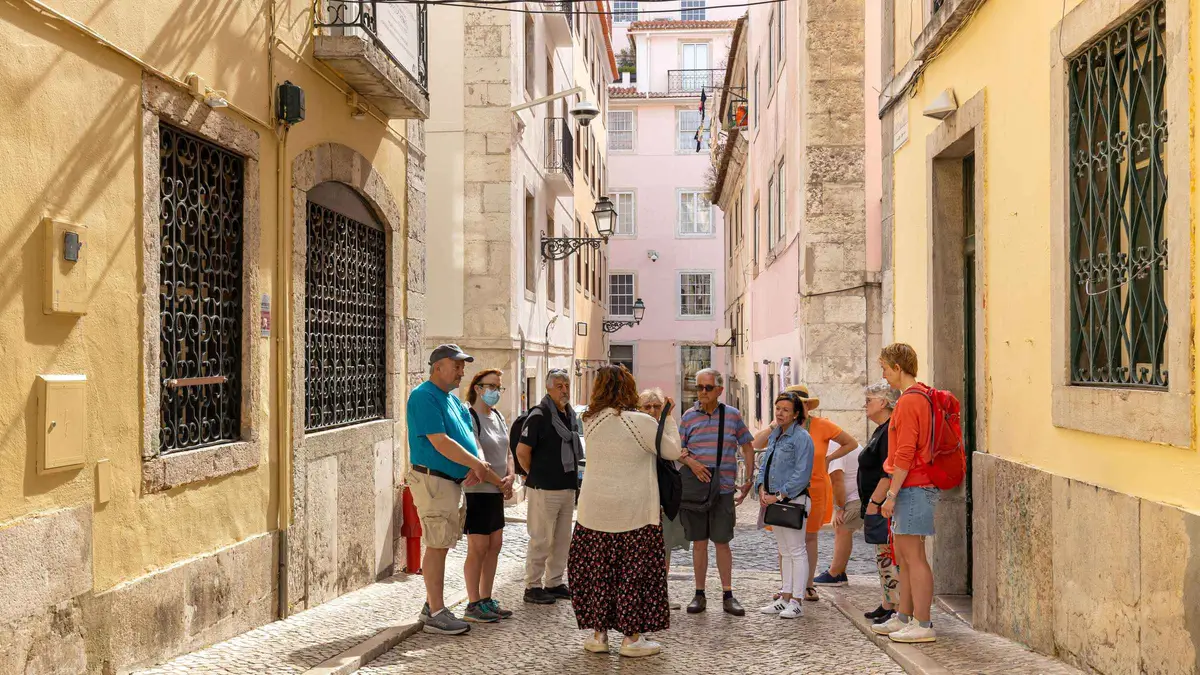 from €25
Lisbon: History, Stories and Lifestyle Walking Tour
listed at $28.96
Three-hour guided walk through Chiado and Bairro Alto up to the Miradouro de São Pedro de Alcântara, built around the city's history and everyday life. Hills and cobbles — wear proper shoes.
Check Availability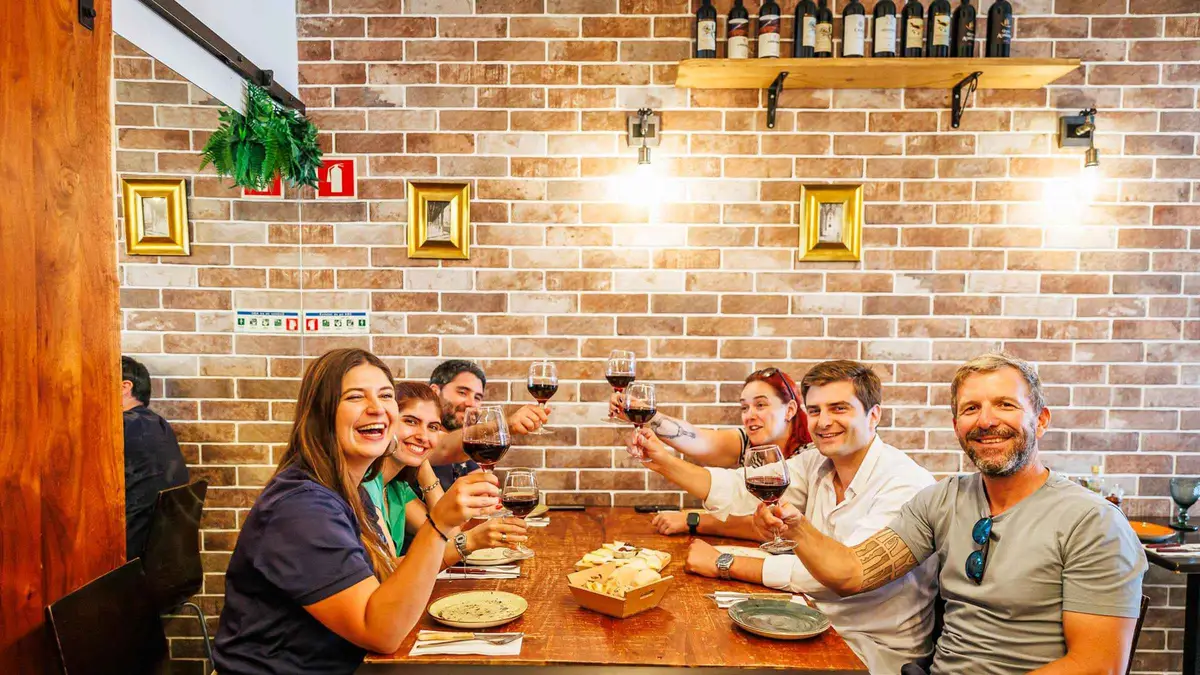 from €70
Lisbon: Food and Wine Small Group Walking Tour
listed at $81.09
Three-hour small-group food walk with 15 food and wine tastings and a culinary guide. Arrive hungry — 15 stops is a full meal.
Check Availability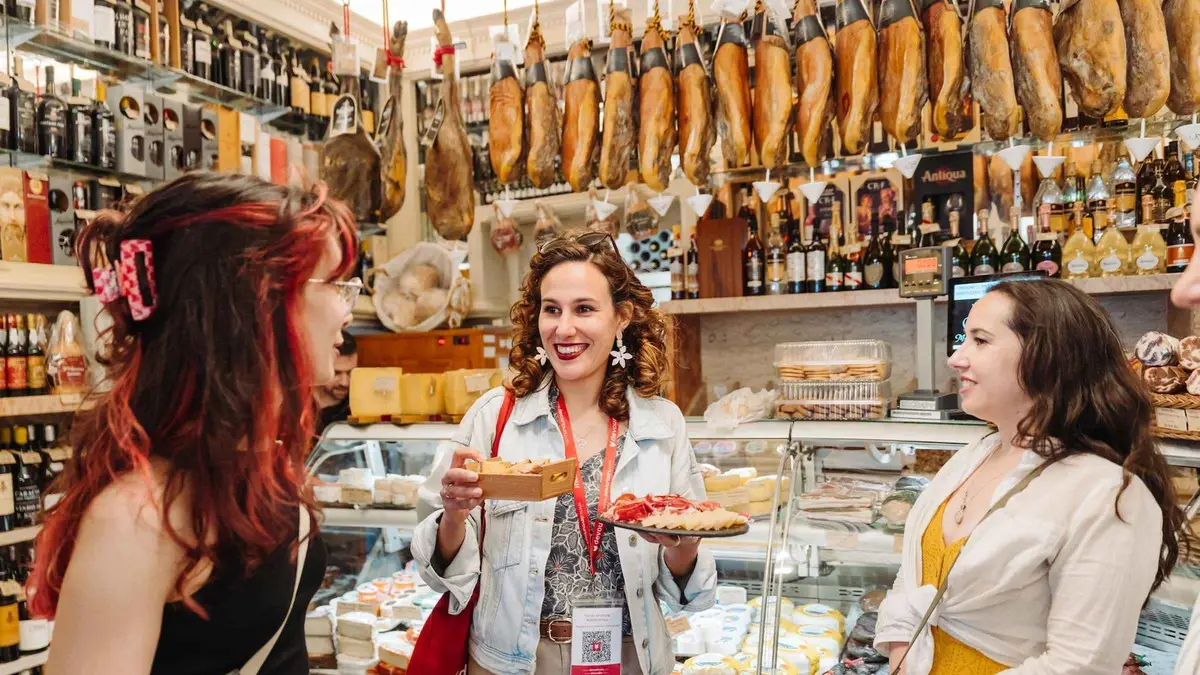 from €67
Lisbon: Tastes and Traditions Guided Food Tour
listed at $77.62
Three-hour morning food tour built around the dishes and drinks you should try before leaving Portugal. The morning slot leaves your evening free.
Check AvailabilityPrices, ratings and details are the platform's own. Dollar figures are the listed prices. The platform bills in your account's currency.
Where the Rest of the Water Story Lives
This page answers the safety question; these pages hold the neighbouring answers.
Where to eat in Lisbon
The couvert law, tipping, kitchen hours and the table ritual the water bottle is part of. Where to eat.
The table customsWhat Lisbon costs a day
Where drinks sit in a daily budget, line by line from official prices. What it costs.
The savings lineBest time to visit Lisbon
IPMA's thirty-year monthly averages behind our August warning, and the months when a water bottle is optional again. When to visit.
The heat calendarSafety and scams
Emergency numbers, pharmacies and the rest of the staying-well layer this page does not repeat. Safety in Lisbon.
The health basicsLisbon Tap Water: Questions
Can you drink tap water in Lisbon?
Yes, everywhere in the city. The supply is drawn mainly from the Castelo do Bode reservoir and Valada Tejo, treated and chlorinated by EPAL, governed by Decreto-Lei 69/2023, and tested about 300,000 times a year with over 99% compliance — the utility's own published chemistry is summarised above.
Why does Lisbon tap water taste of chlorine?
Because chlorine is what keeps it microbiologically safe from the treatment plant to your tap, dosed in small quantities and monitored around the clock. EPAL's own fix for the taste: keep a covered jug of tap water in the fridge — the chlorine dissipates and the cold flattens what remains.
Is Lisbon tap water hard or soft?
Soft to medium. EPAL's supply-wide hardness runs 40–170 mg/L of calcium carbonate with an average of 80 mg/L, and the published Lisbon city-network figure is 58 mg/L — so expect clean-tasting water, little kettle scale, and none of the chalky edge of genuinely hard-water cities.
Will a restaurant serve tap water if I ask?
Often, not always. Ask for "água da torneira"; a neighbourhood tasca will usually pour it, while a tourist-facing place may say bottled only — which is custom and margin, not law, and within its rights. The table ritual gives the script.
Are there free public drinking fountains in Lisbon?
No official city map of drinking fountains exists that we could verify, so do not plan a hot day around street refills. Unless a fountain is explicitly marked "água potável", treat it as ornamental; refill instead at your accommodation or any café where you are a customer — the refill section sizes the habit to the hills.
Is the tap water safe in an old Lisbon building?
The network water is the same everywhere; what can change it is the building's own old pipework, which EPAL itself flags. Its advice: after any long absence, or on first use of the day in an old building, let the tap run for a few seconds. A white glass is dissolved air and clears on standing; a yellow tinge is iron from old pipes, and the run-first rule fixes that too.
The Water Question, on Video
Three takes worth ten minutes: the Europe-wide tap-water answer, the Lisbon mistakes list that covers the bottled-water custom, and a resident's direct answer on Portugal's water.
Truth About FREE Tap Water in Europe | Tap Water in Europe Safe?
The continental context for this page's yes — where free tap water is normal, and where the table custom differs.
Video: Traveling Expats15 Mistakes Tourists Make in Lisbon, Portugal - Don't Do This in Lisbon!
The visitor-mistakes list that covers the restaurant water-and-couvert moment this page scripts.
Video: Wolters WorldIs the Drinking Water Safe in Portugal?
A resident's answer to the exact question in this page's title, in under two minutes.
Video: Joric McLeanVideos load from YouTube only when you press play.
Prices, hours and terms are set by the venue or operator and confirmed at checkout.
We may earn a commission if you book through one of our links, at no extra cost to you. Full affiliate disclosure