 Visit Lisbon Guide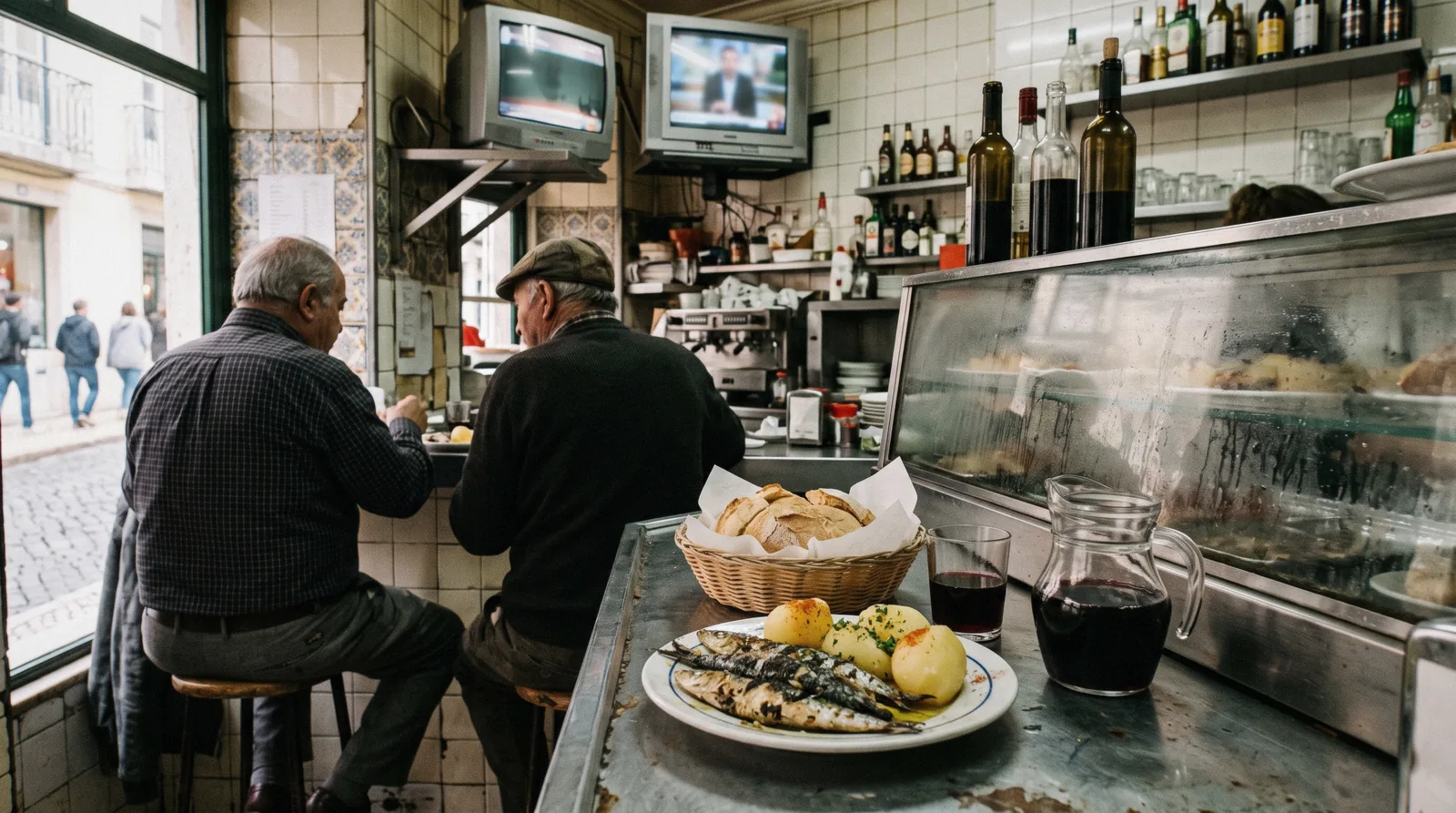
Where to Eat in Lisbon
Most answers to where to eat in Lisbon are a list of restaurant names with nothing behind them. This page names eleven places, but only ones a published guide names first — the MICHELIN Guide Portugal 2026's Bib Gourmand list, the Guia Repsol's Soletes seals of summer 2026, or the venue's own site for the two institutions — and it prints the guide and the year beside each. Around that list it does what what to do in Lisbon does: it explains the dish before the restaurant, the bill before the tip, and the one consumer law every visitor should know before the bread arrives. The tours on this page are the food walks that put a local at the counter with you; the market and the bakery have their own pages.
Quick answer The dishes, the couvert law, the hours, and eleven places a guide names
Eat where Lisbon eats: a tasca at 12:30 for the prato do dia, a grilled-fish place by the river in the evening, a pastelaria counter for the coffee, and one of the Bib Gourmand rooms for the night you book ahead. The bread, olives and cheese that arrive unasked are the couvert, and under Decree-Law 10/2015 nothing you did not order or touch can be charged — send it back untouched and it comes off the bill. Service is in the price; a euro or two rounded up is a thank-you, not a duty. Kitchens are shut between about 15:00 and 19:00 almost everywhere outside the Time Out Market.
Key takeaways
- The eleven places we can name — five from the MICHELIN Bib Gourmand list, four Guia Repsol Soletes, two institutions — are in the place cards, each with a Google Maps link and the guide that lists it.
- Want the counters explained by someone who eats there? The food and wine walk is €70 (about $82) and the Baixa dinner food tour €79 (about $92); the pastel de nata class is the one children ask for.
- The custard tart has its own page — the Belém bakery opens 08:00 and prints no price — and the market hall has another.
- Coeliac, vegan, or allergic to shellfish? The Portuguese menu vocabulary and the certified venues are on gluten-free and vegan Lisbon.
The Nine Things Lisbon Actually Eats
Not a bucket list — the plates you will see on the chalkboard outside a tasca, in the order you are likely to meet them. Prices are not printed because venues do not print them consistently; the costs page builds a food budget from the figures that do exist.
Bacalhau
Salt cod, soaked and cooked a hundred ways: à Brás (shredded with egg, onion and matchstick potato), à lagareiro (roasted in olive oil with punched potatoes), com natas (baked in cream), or as pastéis de bacalhau, the fried cod-and-potato cakes sold at every counter. The fish is Norwegian and has been for centuries; the dish is Portuguese to the bone. Order à lagareiro the first night and à Brás at lunch.
Grilled fish
Sardinhas assadas from June to September, when they are fat — the Santo António night on 12–13 June is a city-wide sardine grill — and dourada, robalo or carapau the rest of the year, grilled whole over charcoal and served with boiled potato and a salad. The price is by weight or by fish; ask which before you nod.
Bifana and prego
The two sandwiches. The bifana is thin pork steaks stewed in garlic and white wine, in a soft roll, mustard on the side; the prego is a beef steak in the same roll, sometimes finished with a fried egg, and at a seafood restaurant it arrives at the end of the meal as the traditional closer. Both are counter food, eaten standing, with a small beer.
Caldo verde and the soups
Shredded kale in a potato purée with a slice of chouriço, served as a starter and at 03:00 after the arraial. Sopa de legumes is the everyday lunch soup in every tasca and usually the cheapest line on the menu.
Amêijoas à Bulhão Pato
Clams opened in garlic, olive oil, white wine and coriander, named for a nineteenth-century poet. Bread for the sauce is the point; the couvert bread is allowed to be used for this.
Caracóis
Small snails simmered in a broth with oregano and garlic, served in a bowl with a toothpick, from late May through the summer. The chalk sign reads 'Há caracóis'. They are a beer accompaniment, not a course.
Pastel de nata
The custard tart. The Belém bakery is the origin and has its own page; every pastelaria in the city bakes them and the good ones sell them warm from the tray with a shaker of cinnamon. One with a coffee is breakfast.
Ginjinha
Sour-cherry liqueur poured in a shot at a standing counter — the famous ones are around Largo de São Domingos beside Rossio — 'com' or 'sem', with or without the cherry in the glass. It is an afternoon drink, not a nightcap.
The coffee
A bica is an espresso; a meia de leite is half coffee, half milk in a cup; a galão is the tall glass with more milk. Ordered at the counter, drunk standing, and the standing price is the one printed first on the list — see the bill.
Tascas, Marisqueiras and Cervejarias: Reading the Doorway
Lisbon's restaurants sort themselves by name before you read a menu. A tasca is the small family place with paper tablecloths, a television, a chalkboard of pratos do dia at lunch and a house wine by the jug; it is where the office eats at 12:30 and it is the honest answer to the question of where locals eat. A marisqueira is a seafood house — glass tanks, shellfish by weight, the prego at the end — and a cervejaria is its beer-hall cousin, louder and open later. A casa de pasto is an old word for a tasca; a petisqueira serves petiscos, the small plates that are Portugal's answer to tapas and are ordered by the table to share.
The Guia Repsol added a seal for exactly these places in November 2025: the Solete, a parallel distinction for tascas, cafés, bars and gelatarias that its sóis for fine dining cannot reach. Lisbon had 69 Soletes at the launch and added more in the guide's summer 2026 round; four of those are in the place cards, including a petisqueira on Rua de O Século and a bakery-café in Saldanha, precisely because they are the type of place a visitor cannot otherwise tell from the doorway.
Two things about ordering. Portions in a tasca are generous and the menu often lists a dose and a meia dose — a half portion, which is a full meal for one — and no one minds if two people share a dose. And the prato do dia is the deal: a main, usually with soup and sometimes a drink and coffee, at a price the tasca prints on the board outside, which is the one Lisbon restaurant price you will always see before you sit.
Reading the Bill: the Couvert Law, Service and the Standing Coffee
The bread, butter, olives, cheese and sometimes a small plate of something better that land on the table before you order are the couvert, and Portugal has a law about them. This section is built on Decree-Law 10/2015 of 16 January, the RJACSR, as summarised by the national press when it came into force and read on 29 August 2026.
Article 135(3) of the decree-law says that no dish, food product or beverage, including the couvert, can be charged if it was not requested by the customer or if it was left unused by the customer — 'inutilizado' — which the law defines as consumed or handled so that it can no longer be served to another table. The price list must include every item the establishment serves, the couvert included. In plain terms: the couvert is optional, it must be on the menu with a price, and if you leave it untouched and say 'não, obrigado' it comes off the bill. Once you have eaten a piece of bread, you have accepted it and you pay the printed price, usually per person or per item.
That is the whole law, and it is why the couvert is not a scam: it is an offer you may decline. The trap is the version where an unasked-for plate of prawns or cured ham arrives and is charged at a marisqueira price. The rule is the same — untouched, it is free; touched, it is yours — so ask 'quanto custa?' before anyone reaches for it.
The other lines on a Lisbon bill are simpler than the couvert.
| Line on the bill | What it is | The rule |
|---|---|---|
| Couvert | Bread, butter, olives, cheese, sometimes more, brought unasked | Optional under Decree-Law 10/2015 art. 135(3): untouched and refused, it cannot be charged; must appear on the price list |
| Serviço | Service | Not a separate line as a rule — service is in the menu price. A printed service charge must be on the price list to be charged |
| Gorjeta | Tip | Not obligatory and not expected as a percentage; rounding up or leaving a euro or two on a good meal is normal, 5–10% at a restaurant where you booked is generous |
| Água | Water | Tap water can be asked for ('água da torneira'); bottled is charged and the size is on the list |
| Balcão / mesa | Counter / table price | The same coffee or pastel can have two prices; the counter price is the lower one and is printed first |
| IVA | VAT | Included in every menu price and never added on top |
Card payment is normal, including contactless, but the tasca on the hill may still be cash-only and will say so at the door; the costs page covers cash machines and the currency-conversion prompt at the terminal. A receipt is legally required and the machine prints one — it is the document a complaint runs on, and the complaints book, the livro de reclamações, is the sign on the wall by the till.
When the Kitchen Is Actually Open
Lisbon eats later than northern Europe and earlier than Spain, and the gap in the afternoon is real. Two venues on this site print their hours; the rest of the table is the pattern a visitor meets, labelled as ours.
The printed ones are the two institutions. Pastéis de Belém opens at 08:00 and closes at 21:00, extended to 22:00 from July to September, every day, on its own site. The Time Out Market in Cais do Sodré runs 10:00–00:00 Sunday to Wednesday and 10:00–02:00 Thursday to Saturday, which makes it the one place in the city where a 16:30 lunch or a 01:00 plate is a certainty rather than a hunt.
| Meal | When Lisbon eats it | Where | Source |
|---|---|---|---|
| Breakfast | 07:30–10:00, standing | Pastelaria counter: coffee and a pastel or a tosta mista | Our observation |
| Lunch | 12:30–14:30; kitchens close about 15:00 | Tasca prato do dia; the Bib Gourmand rooms take lunch bookings | Our observation; Michelin listings |
| The gap | 15:00–19:00 | Time Out Market 10:00–00:00/02:00; pastelarias; the market's Sunday–Wednesday close is midnight | timeout.com/lisboa hours, read 29 August 2026 |
| Dinner | 19:30–22:30; 21:00 is the busy hour | Reserve the guide-listed rooms; tascas seat at 19:30 without a wait | Our observation |
| Late | After 23:00 | Time Out Market to 02:00 Thursday–Saturday; cervejarias; Bairro Alto and Cais do Sodré bars | timeout.com/lisboa; the nightlife page |
| Pastéis de Belém | 08:00–21:00; to 22:00 July–September | Rua de Belém 84–92, table service inside, queue for takeaway outside | pasteisdebelem.pt, read 29 August 2026 |
Sunday evening and Monday are the closures to plan around. Many tascas shut on Sunday, and a number of the guide-listed restaurants take Sunday night and Monday off; the place cards print each venue's stated closing day where the guide or the venue gives one and say 'not stated' where neither does. August is the second trap — family restaurants take their own holidays and the notice is a sheet of paper on the door — and 12–13 June is the third, when every kitchen in Alfama becomes a sardine grill on the pavement and the menu is sardines. The Monday page has the museum side of the same problem.
Eleven Places We Can Name, and Who Says So
Every place below appears in a published list we can point you at — the MICHELIN Guide Portugal 2026's Bib Gourmand selection, the Guia Repsol's Soletes seals of summer 2026, or the venue's own site — and every address opens in Google Maps so you can see the walk before you commit to it. Hours and closing days appear only where the guide or the venue prints them; where neither does, the card says so rather than guess. Prices appear only where the venue prints them itself, which in Lisbon is almost nowhere.
-
Canalha
€€ (Michelin band)The Bib Gourmand that is a bus ride from the centre and worth it: João Rodrigues's farm-to-table Portuguese room on Rua da Junqueira, in the residential stretch between Alcântara and Belém, listed in the MICHELIN Guide Portugal 2026 at its €€ band. Book; it is small and it is the chef the city talks about.
- Address
- Rua da Junqueira 207
- Hours
- not stated — the guide prints none and the venue's site was not read
-
Pigmeu
€€ (Michelin band)Pork, nose to tail, in Campo de Ourique — the neighbourhood west of the centre that tram 28 ends in — cooked with the seriousness the Bib Gourmand rewards, in the MICHELIN Guide Portugal 2026 at €€. The one to pair with the Amoreiras and Estrela side of the city.
- Address
- Rua do 4 de Infantaria 68
- Hours
- not stated
-
Ofício
A wine and dining room on Rua Nova da Trindade in Chiado, Bib Gourmand in the MICHELIN Guide Portugal 2026 — the guide's own word is gastrobar, and it is the listed room closest to the Baixa hotels, so it is the one to book for the first night.
- Address
- Rua Nova da Trindade, Chiado
- Hours
- not stated
-
Carnal
The exception that proves the list is not a Portuguese-only one: a Mexican gastrobar on Rua da Misericórdia, on the Chiado edge of Bairro Alto, Bib Gourmand in the MICHELIN Guide Portugal 2026. Loud, central and the right answer when the table is tired of cod.
- Address
- Rua da Misericórdia 78
- Hours
- not stated
-
Zunzum Gastrobar
Marlene Vieira's contemporary Portuguese room inside the Jardim do Tabaco cruise terminal building on the Alfama waterfront — Bib Gourmand since 2024 and still in the MICHELIN Guide Portugal 2026 selection. A ten-minute walk down from the Alfama miradouros, and the lunch to book on a Sé and castle day.
- Address
- Avenida Infante Dom Henrique, Doca Jardim do Tabaco, Terminal de Cruzeiros
- Hours
- not stated
-
Tascardoso
A petisqueira on Rua de O Século, the quieter western street of Bairro Alto, given a Solete by the Guia Repsol in its summer 2026 round — the seal the guide created in November 2025 for tascas and small plates. This is the doorway a visitor cannot read from outside, and the guide read it for you.
- Address
- Rua de O Século 242
- Hours
- not stated
-
Padaria 110
A bakery-café on Rua Filipe Folque near Saldanha, a Solete in the Guia Repsol's summer 2026 round in its café and pastry category — the breakfast stop for anyone staying in the Avenidas Novas hotels rather than the old town, and a bread counter worth the metro ride otherwise.
- Address
- Rua Filipe Folque 28B
- Hours
- not stated
-
Calma
A natural-wine bar, shop and kitchen on Largo Agostinho da Silva, between Príncipe Real and São Bento, a Solete in the Guia Repsol's summer 2026 round in the wine-bar category. Seasonal plates rather than a menu of mains; the place for the evening that is a glass and three petiscos.
- Address
- Largo Agostinho da Silva 1
- Hours
- not stated
-
Magnólia Bistrot e Wine Bar
On Praça das Flores, the small square below Príncipe Real, a bistro and wine bar with a Solete from the Guia Repsol's summer 2026 round. Brunch by day and wine by the glass at night on one of the city's better squares to sit in.
- Address
- Praça das Flores 43
- Hours
- not stated
-
Pastéis de Belém
The bakery that has made the tart since 1837 on the recipe from the monastery next door, and the one venue on this page that prints its hours: 08:00–21:00, to 22:00 from July to September, every day. It prints no price, so we print none. The takeaway queue is outside; the tiled rooms inside seat hundreds and move faster than the queue suggests — the full page.
- Address
- Rua de Belém 84–92
- Hours
- 08:00–21:00 daily; to 22:00 July–September
-
Time Out Market Lisboa
The Mercado da Ribeira's food hall in Cais do Sodré: some forty counters under one roof, the only place in the city that prints a 10:00–00:00 (Sunday–Wednesday) and 10:00–02:00 (Thursday–Saturday) opening, and the answer to the afternoon gap and the late plate. It is a curated hall, not a market — the market page explains the difference and where the real produce market is.
- Address
- Avenida 24 de Julho 49, Cais do Sodré
- Hours
- 10:00–00:00 Sunday–Wednesday; 10:00–02:00 Thursday–Saturday
Not a ranking — who is in the published lists, checked on 29 August 2026. The MICHELIN Guide pages return an access error to automated readers, so the Bib Gourmand entries were confirmed from the guide's own indexed listings and the 2026 Portugal selection announcement; the Soletes from the Guia Repsol's summer 2026 announcement. Addresses are as listed by the guides and public directories; we did not read every venue's site, which is why most hours say 'not stated'.
Telling a Tourist Trap From a Real Place, on the Spot
Lisbon has no restaurant that is dangerous, only ones that are dull and overpriced, and they cluster where the crowd does: the pavement tables on Rua Augusta and the Praça do Comércio arcades, the fish restaurants with a man outside holding a laminated menu in six languages on the Alfama steps, and the sardine 'specials' on the Bairro Alto corners. The signals are consistent. A menu with photographs; a host on the pavement; a fixed 'tourist menu' price in large type; paella, which is Spanish; and a couvert of prawns or ham brought without a word, which is the version of the couvert the law exists for.
The positive signals are equally consistent. A chalkboard in Portuguese only, rewritten daily; a television with the football on; a jug of house wine on the next table; a queue of people in work clothes at 12:45; the sign 'Há caracóis' in June. The Guia Repsol's Solete is the closest thing to a published version of that instinct, which is why four of them are on this page.
The honest test is the one the couvert law gives you: ask what the bread costs. A real place tells you a number and does not mind; a trap looks pained. And read the bill line by line — the bill section has every line you should expect — because the one overcharge that is common is not the couvert but the bottled water and the 'service' that was never on the list.
The Markets, Read as Food
Two markets carry the name and they are different things. The Time Out Market is the western half of the 1892 Mercado da Ribeira in Cais do Sodré and it is a food hall: chef counters, a shared seating floor, the printed hours above, and a crowd. The eastern half of the same building is still the produce market in the mornings, and that is where the fish, fruit and flowers are. The Time Out Market page weighs the two and prices the hall from the counters' own boards.
The neighbourhood markets are where the cooking above is bought. Mercado de Campo de Ourique, a few streets from Pigmeu, is a small covered market with a food court that the neighbourhood uses; Mercado de Arroios is the one in the immigrant east of the centre with the best cheap lunch counters; Mercado 31 de Janeiro near Saldanha is the produce market for the Avenidas Novas. None of them prints hours a visitor can rely on, so treat them as morning places, closed Sunday afternoon and Monday.
For the LX Factory Sunday market under the bridge, the LX Factory page covers the food; for the tile-and-market morning in Belém, the Belém page puts the bakery and the monastery in the right order.
Water: the Fountains and the Tap
Lisbon's tap water is safe to drink and the city's own water company, EPAL, publishes its quality results; asking for água da torneira at a table is legal and normal, though some restaurants will bring a bottle unless you insist. Public drinking fountains are fewer than in an Italian city — look for the small green EPAL fountains in the parks and along the riverfront — so carry a bottle in July and August, when IPMA counts 8.5 to 10.2 days above 30°C (the month table).
The bottled water on a menu is charged by size and the size is on the price list; a litre bottle at a tasca is the reasonable order for a table of two. The 'still or sparkling' question is 'sem gás ou com gás'.
When a Guide Is Worth It at the Table
Four food tours that put a local at the counter with you — the classic food and wine walk, the pastel de nata class, the Baixa dinner walk and the tastes-and-traditions tour. Prices, ratings and review counts are the platform's own figures, checked on 29 August 2026; the full comparison is on the food tours page.
 from €70
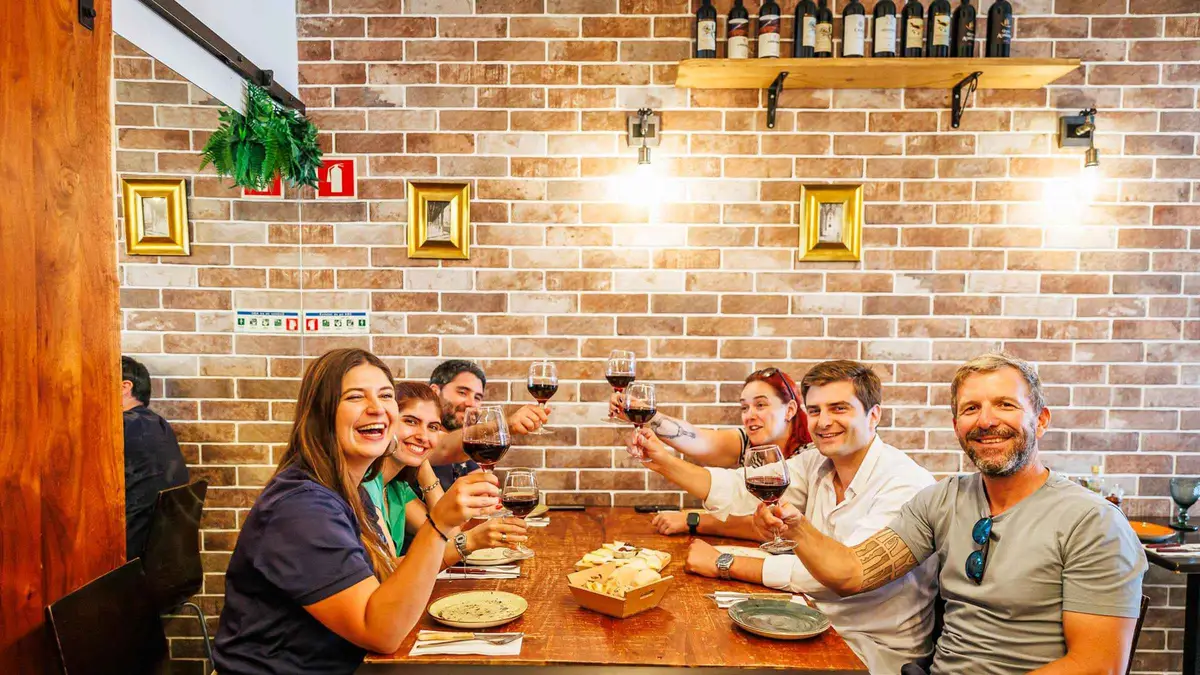
Lisbon: Food and Wine Small Group Walking Tour
listed at $81.09
Three-hour small-group food walk with 15 food and wine tastings and a culinary guide. Arrive hungry — 15 stops is a full meal.
Check Availability from €55
Lisbon: Pastel de Nata Baking Class
listed at $63.71
Two-hour hands-on class where you make pastéis de nata from scratch with a chef, then eat them warm with local drinks. Baking, not a tour.
Check Availability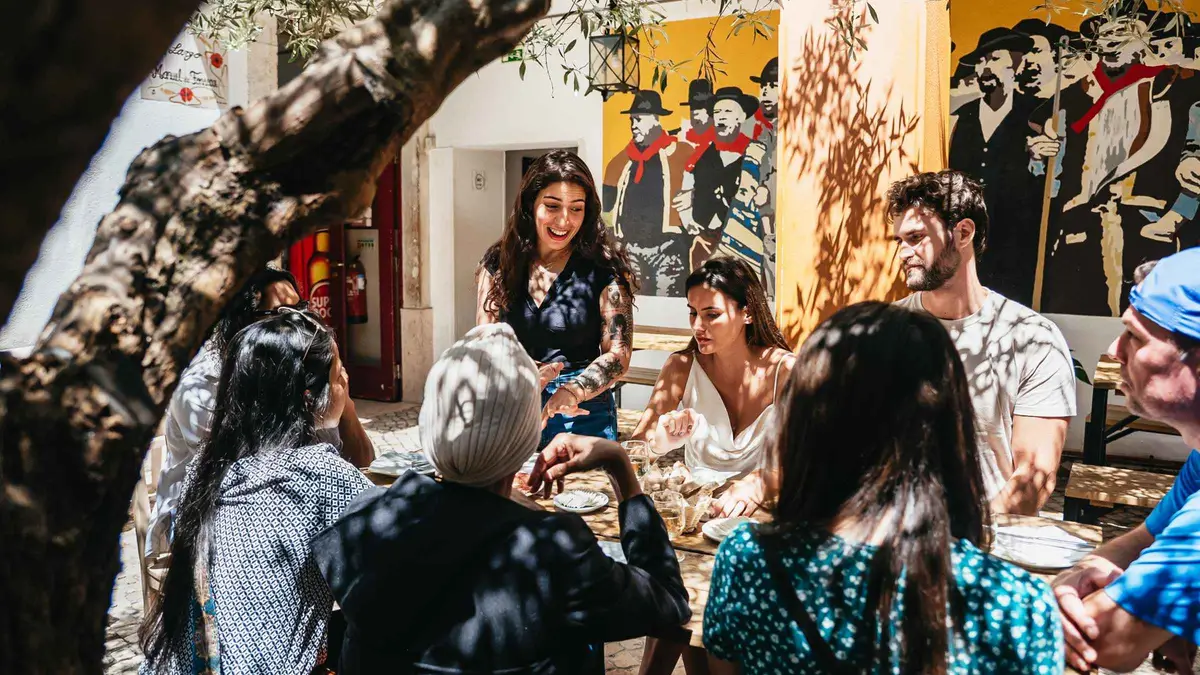 from €79
Lisbon: Baixa District Food Tour with Dinner and Drinks
listed at $82.37
Evening food tour of Baixa with eight tastings and four drinks across taverns and family-run eateries — it replaces dinner. Evening slot, so it pairs badly with a Fado show the same night.
Check Availability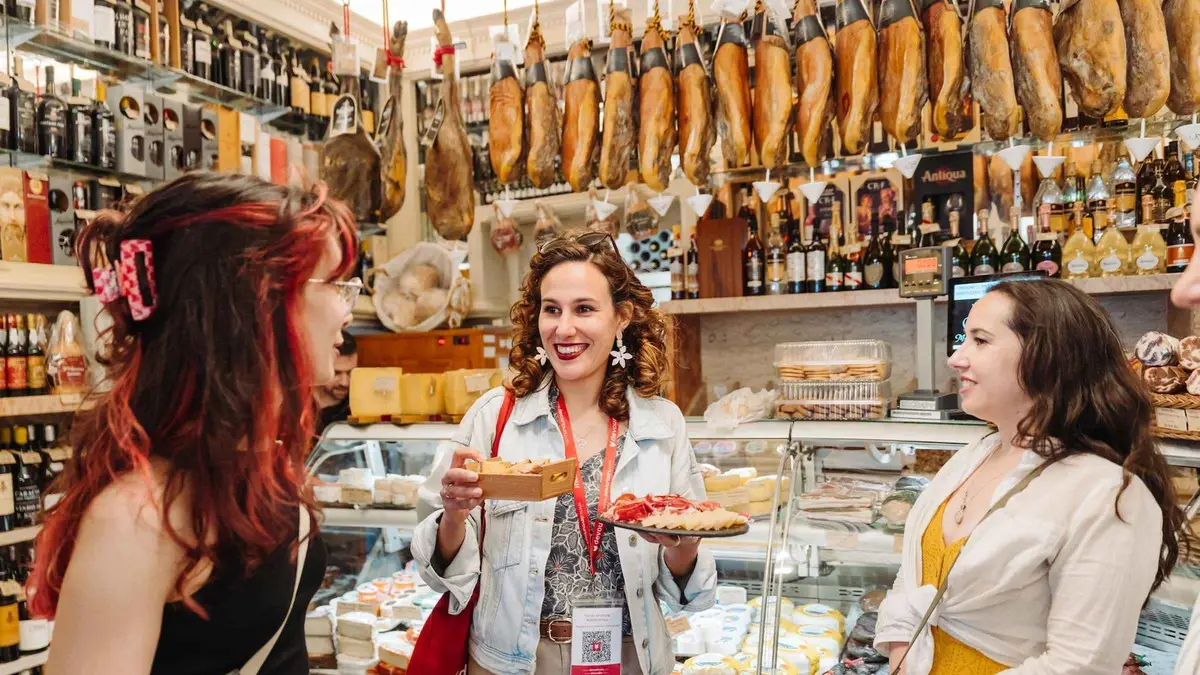 from €67
Lisbon: Tastes and Traditions Guided Food Tour
listed at $77.62
Three-hour morning food tour built around the dishes and drinks you should try before leaving Portugal. The morning slot leaves your evening free.
Check AvailabilityPrices, ratings and details are the platform's own. Dollar figures are the listed prices. The platform bills in your account's currency.
Where to Go Next
The tart, in detail
The Belém bakery's hours, the queue trick and the monastery next door: Pastéis de Belém.
Tram 15E from Cais do SodréThe food hall
Forty counters, two hours, and the produce market next door that most visitors miss: the Time Out Market.
Cais do SodréThe budget behind the bill
Three daily budgets built from official fares and prices, with the food row explained: what Lisbon costs. Or go back to things to see in Lisbon.
Per person, per dayEating in Lisbon: Questions
What is a must-eat in Lisbon?
Bacalhau à lagareiro or à Brás, a plate of grilled sardines between June and September, a bifana at a counter, amêijoas à Bulhão Pato, and a pastel de nata warm with cinnamon — the nine dishes are explained in what Lisbon eats. If you take one meal seriously, book a Bib Gourmand room from the place cards.
Where do locals eat in Lisbon?
In tascas at 12:30, on the prato do dia written on the board outside. The published version of that instinct is the Guia Repsol's Solete seal for tascas and cafés, launched in November 2025 with 69 Lisbon venues; four summer-2026 Soletes are in the place cards, and the food and wine walk takes you into the counters with someone who eats there.
Do you tip waiters in Lisbon?
Not as a duty. Service is included in the menu price and there is no expected percentage; rounding up or leaving a euro or two is normal, and 5–10% at a restaurant where you booked and were looked after is generous. Card terminals rarely prompt for a tip. The lines on the bill are in reading the bill.
Do I have to pay for the bread and olives in Lisbon?
Only if you touch them. Under article 135(3) of Decree-Law 10/2015 nothing not requested or left unused can be charged, and the couvert must be on the price list. Say 'não, obrigado' when it arrives, leave it untouched, and it comes off the bill — see the couvert law.
What time do people eat dinner in Lisbon?
Between 19:30 and 22:30, with 21:00 the busy hour. Most kitchens are closed from about 15:00 to 19:00; the Time Out Market, open 10:00–00:00 Sunday to Wednesday and to 02:00 Thursday to Saturday, is the exception — see when the kitchen is open.
How much does a meal cost in Lisbon?
A tasca prato do dia is the cheapest full meal in Western Europe's capitals and the Bib Gourmand rooms are, by the guide's own definition, good value; what is expensive is the shellfish by weight and the terrace on Praça do Comércio. The numbers that exist are built into a food budget on what Lisbon costs.
Eating in Lisbon on Video
Three food films, a chef's list, a 48-hour bar-and-restaurant run and a street-food tour, which cover the dishes and the districts in the where-to-eat table above.
Where You Should Eat in Lisbon According to a Pro Chef | Where the Chefs Eat | Condé Nast Traveler
A pro chef's picks, several of which appear in the restaurant list on this page.
Video: Condé Nast Traveler48 HOURS IN LISBON - The Best Bars & Restaurants - 17 Of Lisbon's Finest in 2023
Seventeen bars and restaurants in 48 hours, the district-by-district structure used above.
Video: TOPJAWLisbon STREET FOOD Tour: 8 Snacks You Can’t Miss! 🇵🇹
Eight street snacks, the cheap-eats section of this page on camera.
Video: Dan FandelliVideos load from YouTube only when you press play. Prices and closures mentioned on camera may predate the 2026 changes printed on this page.
Prices, hours and terms are set by the venue or operator and confirmed at checkout.
We may earn a commission if you book through one of our links, at no extra cost to you. Full affiliate disclosure